•
3 mins
Most stress advice focuses on managing the reaction. Learn how perception and thought shape your stress response and how a brief pause can create more choice.

The Big Lie About Stress and How to Take Back More Control
What if some of what you have been taught about stress is incomplete?
Most advice focuses on managing stress after it has already taken hold. You are encouraged to breathe deeply, meditate, exercise, rest, or distract yourself until the feeling passes.
Those tools can be useful. I use and teach several of them. But they often address the reaction without helping you understand what keeps creating it.
In this video, I explained the big misconception behind conventional stress management and introduce a different way to understand what happens between an external circumstance and your internal response:
If the same situations repeatedly produce the same thoughts, emotions, and behaviors, temporary relief may not be enough. You also need to understand the pattern beneath the reaction.
Your Stress Experience Is Shaped From Within
External circumstances matter. Deadlines, conflict, financial pressure, uncertainty, health concerns, and difficult relationships can all place real demands on us.
But the circumstance is not the entire stress experience.
Between an event and your response is an internal process. You interpret what is happening. You decide what it means. You anticipate what might happen next. You resist what you believe should not be happening.
That internal process influences the intensity and duration of your stress response.
This does not mean that every difficult circumstance is your fault. It means that part of your experience may be more changeable than it initially appears.
A Simple Stress Pattern
One way to understand the process is:
Circumstance → Perception → Thought → Emotion → Reaction
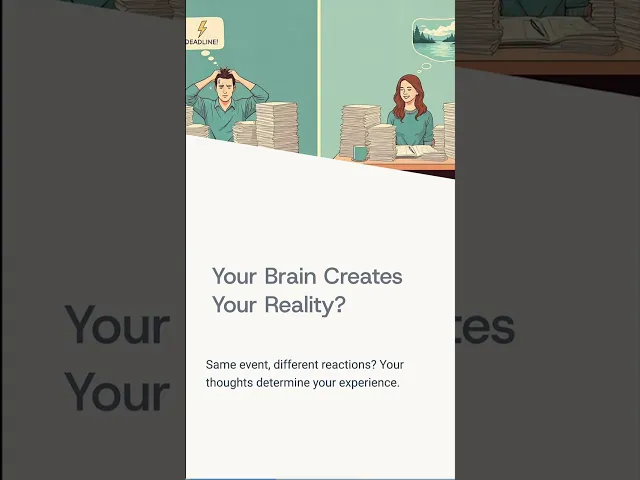
Two people can encounter a similar circumstance and experience it very differently. The difference is often found in the meaning each person gives the situation and the patterns they bring into it.
When you recognize that pattern, you gain an opportunity to respond more intentionally.
Questions That Can Interrupt the Pattern
When you notice yourself becoming overwhelmed, pause and ask:
What am I telling myself about this situation?
Do I know that interpretation is completely true?
What outcome am I trying to control?
What am I resisting right now?
Is there another way to understand what is happening?
What response would be most useful in this moment?
These questions are not meant to dismiss a real problem. They create enough space to examine your interpretation before it automatically becomes your reaction.
Try the Micro Pause
The next time something triggers you, try this short process:
Pause. Stop for a few seconds before reacting.
Notice. Identify the thought, interpretation, or expectation creating pressure.
Question. Ask whether that interpretation is the only possible explanation.
Choose. Decide how you want to respond instead of allowing the familiar pattern to decide for you.
The goal is not to eliminate every uncomfortable emotion. The goal is to become more aware of what is happening inside you and create more choice in what happens next.
Practiced consistently, this small pause can help you recognize patterns that may otherwise remain invisible.
Stop Managing the Same Pattern
Stress management can provide valuable relief. But lasting change often requires more than calming yourself after the reaction begins.
It requires understanding what repeatedly activates the pattern, what keeps it going, and where you have an opportunity to respond differently.
That is the central idea behind Stress Less.
Discover Your Stress Less Pattern
The Stress Less Assessment helps you identify the pattern most closely connected to how you currently experience and respond to stress. It gives you a clearer starting point for understanding what may be happening and what to explore next.
Take the Stress Less Assessment
The assessment is educational and is not a medical or psychological diagnosis.

Adam Ouellette
Creator of Stress Less and High Performance OS. Adam’s work focuses on helping people recognize the patterns influencing stress, performance, and intentional action.
What pattern is shaping your stress response?
Take the Stress Less Assessment for a clearer starting point.